
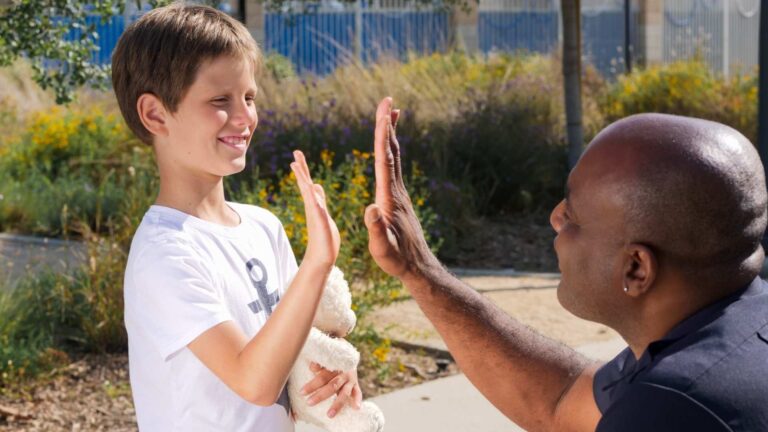
Are Individuals with Autism More Likely To Have Encounters with Law Enforcement?
The relationship between autism and law enforcement can be complex and challenging to navigate. Autism affects how a person communicates, understands information, and interacts with their surroundings. This unique way of managing sensory sensitivities means that behaviors that might be seen as suspicious or criminal by police could actually be responses to the challenges autism presents, such as feeling overwhelmed by sounds or lights, feeling confused, or trying to calm themselves.
While the legal system must hold individuals accountable, it must also recognize when someone’s behavior comes from a neurodevelopmental condition. Unfortunately, many neurodiverse individuals end up caught in a system that doesn’t fully understand them. In situations like these, we must pause and ask: how can we do better?
Imagine this: a young man with autism is walking down the street, flapping his hands to calm himself. He avoids eye contact, doesn’t respond to verbal commands, and appears agitated. A police officer approaches, interprets the behavior as suspicious, and escalates the situation. What began as a misunderstanding turned into a crisis.
This isn’t a rare occurrence. Autism and police encounters can become particularly challenging when differences in communication, behavior, or responses to sensory input are misunderstood during an interaction. As autism awareness continues to grow, so does the need to help law enforcement recognize these differences and respond in ways that promote safety, understanding, and respect.
In this article, ABA Centers of Connecticut explores some of the challenges that can arise during interactions with law enforcement, why autism-informed police training matters, and how families can help prepare their children for unfamiliar or high-stress situations, so they can navigate autism and law enforcement with greater confidence.
Building Safer Interactions: Autism and Law Enforcement
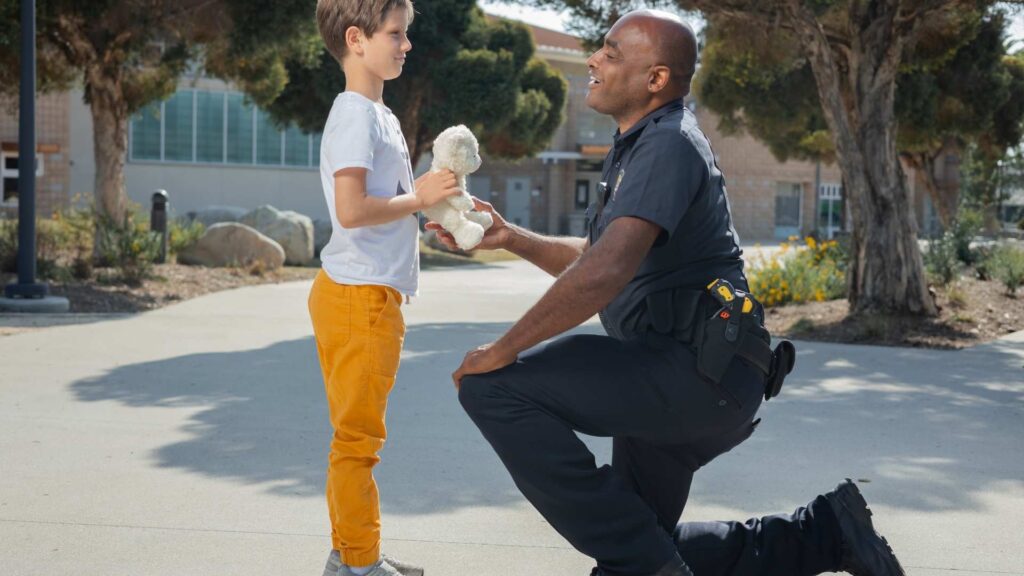
The intersection of autism and law enforcement is a sensitive but essential topic. Research indicates that young people with autism face a heightened likelihood of encountering law enforcement, with studies showing that roughly 20% are stopped and questioned by police before reaching adulthood. Unfortunately, these interactions are often fraught with confusion, fear, and misinterpretation.
Autism behaviors, such as avoiding eye contact, echolalia (repeating words), or not responding to commands, can be mistaken for defiance or aggression. These misunderstandings can quickly escalate encounters, especially when officers are unaware that the individual they’re dealing with is neurodivergent.
A powerful report from Criminal Legal News highlights several cases where a lack of autism and police awareness led to tragic outcomes. In many instances, law enforcement lacks the training to recognize the signs of autism, let alone how to respond appropriately.
So, what can we do? The answer lies in preparation, education, and empathy.
Police Protocol for Autism Spectrum Disorder
Police interactions with neurodiverse people require a tailored approach. While some departments have implemented training programs, there is still no universal police protocol for autism that officers can rely on nationwide.
A paper published on PubMed Central emphasized that police officers often overestimate their understanding of autism. In practice, many still associate autism primarily with intellectual disability or childhood behavior. Without a clear, nationally adopted approach to autism and law enforcement, many officers are left unprepared to handle real-world autism and police encounters appropriately.
Some key recommendations for improving encounters between autism and law enforcement:
- Use explicit, concrete language: Avoid idioms and abstract commands, as recommended by police protocol and autism training guides.
- De-escalation techniques:Backing off, giving space, and using a calm tone.
- Visual identifiers: Some individuals on the spectrum can carry autism ID cards or wear medical bracelets.
- Minimizing sensory triggers:Sirens, shouting, and flashing lights can overload the senses.
Trauma-informed policing models are being introduced to complement evolving Police Protocol for Autism strategies to reduce harm during crises.
These approaches encourage law enforcement to recognize signs of trauma and adjust their responses to reduce harm. For individuals with autism, whose experiences with the world can already be overwhelming, this could make all the difference in autism and law enforcement.
Bridging the Gap: Autism Awareness in Policing Today

Mandatory autism-specific training, partnerships with local autism organizations, and the inclusion of advocates’ voices in program development are all powerful tools.
It’s also about changing mindsets. Law enforcement culture often prizes authority and control, but dealing with neurodiverse individuals requires flexibility, empathy, and compassion. By recognizing that some behaviors are expressions of anxiety or sensory overload—not threats—police officers can change the trajectory of an encounter.
Parents and caregivers also have a core role. Teaching children and teens how to identify themselves to the police, what to expect during an encounter, and how to role-play scenarios can build confidence and reduce fear on both sides.
How ABA Therapy Supports Neurodiverse Individuals in Encouraging Effective Interactions

Applied Behavior Analysis (ABA) therapy is one of the most effective tools for helping neurodiverse individuals navigate the world, including autism and police encounters. By focusing on communication, emotional regulation, and social skills, ABA prepares individuals for situations that might otherwise cause stress or confusion.
For example, a child in ABA therapy might learn how to respond when someone asks for their name, how to use a calm-down strategy, or how to express discomfort with words rather than behaviors that could be misinterpreted in autism and police interactions.
Early intervention is especially powerful. When children receive support during key developmental years, they build skills that help them succeed—whether at school, at work, or in the community. These skills also protect them in high-stakes situations, such as interactions with people with autism and law enforcement, by helping them respond in ways that align with a clear Police Protocol for Autism framework and support safe, respectful interactions between people with autism and law enforcement.
At ABA Centers of Connecticut, we empower families through diagnostic evaluations, early intervention, and personalized ABA therapy. Every child deserves the tools to thrive—and that includes being safe and understood during interactions with law enforcement.
A Path Toward Mutual Understanding
Improving the relationship between autism and law enforcement isn’t about choosing sides—it’s about seeing the whole picture. Neurodiverse individuals deserve dignity, and police officers deserve the training and tools to respond safely and compassionately.
We’ve come a long way, but there’s more to do. We must invest in autism education for law enforcement, empower individuals with life skills, and create systems that value understanding over punishment. Strengthening how we address autism and police encounters is part of that mission—ensuring safety and dignity on both sides.
If you’re a parent, educator, or officer, start with awareness. Seek training. Ask questions. And support policies that prioritize autism and police preparedness.
Looking for support? We’re here for you at ABA Centers of Connecticut. We offer diagnostic services, early intervention, and personalized ABA therapy to help your child build a safe and prosperous future—both in treatment and in the real world, including positive autism and police encounters. Call us at (844) 395-0448 or contact us online for a free consultation.
Because actual safety means being seen, understood, and supported.